Wreath Heirloom-style Floral Embroidery: A Designer's Take
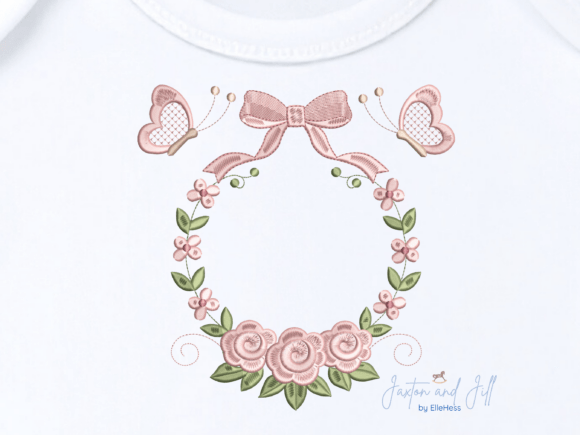
Some embroidery designs land in my inbox and I immediately know which project they belong to. Others take a little more thought. The Wreath Heirloom-style Floral Embroidery fell somewhere in between. It did not scream one single use case, and honestly, that is what made it interesting. The oval arrangement of soft pink roses, small blossoms, gentle greenery, and elegant scroll accents reads as quiet, polished, and deliberately nostalgic without tipping into dated territory. That balance is harder to achieve than most people realize.
My first impression was that this is a Nursery design at heart, but limiting it to baby projects would be a mistake. The heirloom feel gives it range. I could see this on a christening gown, yes, but also on a linen pillow cover in a guest bedroom, the corner of a bridal handkerchief, or the front panel of a boutique tote bag. The shape is what makes it versatile. An oval wreath naturally frames things, which means you can drop a monogram, a short name, or even a date in the center and suddenly you have something that feels custom without extra design work.
First Look at the Design Personality
Opening the Wreath Heirloom-style Floral Embroidery file, what struck me was the restraint. The roses are soft pink, not candy-colored or overly bright. The greenery is gentle, not spiky or dense to the point of bulk. The scroll accents curve with intention, pulling the eye around the oval in a way that feels rhythmic rather than busy. This is not a design that shouts for attention. It sits quietly on the fabric and waits to be noticed. For certain products, that quiet quality is exactly what sells.
If you sell handmade baby blankets, embroidered muslin swaddles, or nursery wall decor, the mood here is spot on. Customers shopping for heirloom-quality baby gifts tend to gravitate toward designs that feel timeless and soft. This one checks both boxes. The pink is not so saturated that it alienates buyers who prefer gender-neutral tones, and the overall layout is symmetrical enough to feel orderly without being stiff.
Where This Design Performs Best
I mentally placed this embroidery design on about a dozen different products while evaluating it, and a few stood out as genuinely strong fits.
First, baby clothing and nursery textiles. A soft cotton footie, a lightweight baby blanket, a crib sheet corner, or a nursery pillow sham. The oval wreath shape frames a monogram beautifully, and that is a product type that commands higher prices on Etsy and at craft fairs. Parents and gift buyers pay a premium for personalized baby items that look like they could become keepsakes, and this design delivers that exact message.
Second, bridal and wedding accessories. A linen handkerchief with this wreath in one corner and initials in the center reads as thoughtful and tasteful. The same goes for ring bearer pillows, flower girl sashes, or even a subtle accent on the inside of a bridal robe. The scrollwork and soft pink roses feel appropriate for romantic, heirloom-style wedding details without being overly frilly.
Third, everyday boutique items. I kept coming back to the image of a natural cotton canvas tote bag with this wreath embroidered in the center, paired with a single initial. It elevates a simple tote into something that feels personal and giftable. A tea towel with this design in one corner, perhaps with a small name or date, would sell well in a kitchen-themed handmade collection or as part of a bridal shower gift set.
Fourth, apparel accents. I tested the visual of this design on a crewneck sweatshirt, specifically placed off-center near the heart. On a soft cream or blush-toned sweatshirt, the pink roses blend into a tone-on-tone effect that is subtle and on-trend. On white, the contrast is just enough to make the greenery and scroll accents visible without feeling heavy. I would not put this on a t-shirt with high stretch unless the stabilizer choice is dialed in perfectly, but on a structured sweatshirt or french terry pullover, it works.
Real Project Scenario: The Baby Gift Tote
Here is the real-life scenario I walked through while evaluating this design. Imagine a small handmade shop preparing for spring market season. The seller wants a signature product that feels elevated, repeatable, and easy to personalize without adding hours of design time per order. She decides on a natural linen tote bag with the Wreath Heirloom-style Floral Embroidery centered on the front panel, with a single script initial inside the wreath.
The product photographs beautifully in soft morning light. The oval shape sits proportionally on a standard 14-by-16-inch tote without crowding the edges or getting lost in the fabric. Customers see it at the market booth and immediately ask if they can order one with their baby's initial. The seller can say yes confidently because she knows the design stitches cleanly, the density is manageable on medium-weight linen with a quality cutaway stabilizer, and the thread changes do not slow production to a crawl.
That is the kind of product-viability thinking I apply to every design I evaluate. Not just whether it looks nice on a screen, but whether it can sustain itself in a real business workflow. This design passes that test.
Technical Considerations Before Stitching
No embroidery design is perfect for every situation, and pointing out the limitations is just as important as highlighting the strengths. The Wreath Heirloom-style Floral Embroidery has a few practical considerations worth noting before you commit to a production run.
Small hoop sizes may struggle here. The oval shape needs breathing room. If the design is scaled down too aggressively to fit a 4x4 hoop, those small blossoms and scroll accents risk becoming muddled. Check the actual stitch dimensions provided with the file. If your machine maxes out at a small hoop, test the scaled version on scrap fabric first and look carefully at whether the fine details read clearly.
Dark fabrics require contrast testing. Soft pink roses on a black sweatshirt or navy tote bag are going to behave differently than they do on white or cream. The greenery in particular might fade into darker backgrounds. I recommend stitching a test swatch on your intended fabric color before committing to a finished product. Sometimes all it takes is swapping one thread color to rescue the contrast, but you need to see it stitched to know for sure.
Stretchy fabrics demand proper stabilization. If someone wants this on a baby onesie or a thin jersey t-shirt, the stabilizer choice matters enormously. The wreath shape involves directional stitching and some density in the rose layers. Without a solid cutaway stabilizer, the design can pucker or distort on knit fabrics after washing. I would also add a water-soluble topper on anything with a nap or texture, like terry cloth or fleece blankets, to keep the stitch definition crisp.
Curved surfaces like caps are not ideal. The oval wreath is inherently flat in its visual weight. Trying to arc it over the curved crown of a cap would require reshaping or careful placement, and even then, the scrollwork might warp awkwardly. Stick to flat or gently curved surfaces for the cleanest result.
Stitch Quality and Visual Appeal
When I assess an embroidery design for actual stitching, I pay attention to how the stitch types interact. The roses in this design likely rely on fill stitch or layered satin stitch to build the petal texture. The greenery appears to use running stitch or lighter fill for the leaf veins, which keeps the overall density from becoming stiff. The scroll accents look like satin stitch work, which means they need enough width to lay down cleanly. If those scroll lines are too thin, the satin stitches can sink into softer fabrics and lose definition.
The stitch density in the rose clusters is probably the heaviest part of this design. That is not a flaw. It just means you need to be mindful of what fabric you pair it with. A heavy canvas tote or structured linen pillow cover handles that density beautifully. A thin cotton onesie might feel stiff and scratchy against a baby's skin if the back of the embroidery is not covered or softened. For baby items, I always recommend adding a soft backing or using a lightweight stabilizer that trims away cleanly to reduce bulk against delicate skin.
Thread Color and Fabric Pairing Advice
The soft pink palette in this design is one of its biggest selling points, but it also requires thoughtful pairing. On a warm cream fabric, the pink roses feel cohesive and tonal, and the greenery adds just enough cool contrast to keep it from going flat. On pure white, the pink pops more noticeably, which some customers love and others find too contrasty for a subtle heirloom look. On blush or dusty rose fabric, the entire design can blend in too much, losing the scrollwork and leaf details. Test it before offering color options to customers.
I also recommend checking the design in grayscale before finalizing any thread color substitutions. Converting a preview image to black and white helps you see where the contrast is actually coming from. If the design relies entirely on color to differentiate the elements, you might lose readability on certain fabrics. This one seems to rely on both color and stitch texture, which gives it more flexibility.
Licensing and Commercial Use
Before you list a finished product with the Wreath Heirloom-style Floral Embroidery in your Etsy shop or craft fair booth, confirm the licensing terms that came with the digital embroidery file. Most embroidery design marketplaces clearly state whether the design is for personal use only, limited commercial use, or full commercial use. If you plan to sell physical finished products embroidered with this design, you need a license that explicitly permits that. Do not assume. Check the terms, keep a copy of the license for your records, and if the terms are unclear, reach out to the designer before selling anything.
What Customers Notice in the Finished Product
From years of watching how buyers interact with embroidered goods, I can tell you that certain design qualities drive more engagement and higher perceived value. Symmetry is one of them. A well-balanced oval wreath reads as intentional and skilled. The heirloom styling suggests quality and permanence. The soft floral palette appeals emotionally. These are not small things. They are the details that make someone pick up a product, hold it close, and imagine giving it to someone they love.
When a customer sees this wreath embroidered on a baby blanket or a linen tote, they are not thinking about stitch count or thread tension. They are thinking about how it makes them feel. That emotional signal is what turns a nicely stitched product into something people are willing to pay more for. The Wreath Heirloom-style Floral Embroidery carries that signal well, as long as the stitching execution is clean and the fabric pairing makes sense.
Practical Designer Notes for Production
- Always run a test stitch on the actual fabric and stabilizer combination you plan to use in production.
- Check the design dimensions against your hoop size before purchasing the file to avoid disappointment.
- Inspect the small blossoms and scroll accents after the test stitch to confirm they read clearly and do not blur together.
- Compare results on light fabric and dark fabric if you plan to offer multiple colorways.
- Use a cutaway stabilizer for knits and a tear-away or wash-away option for wovens depending on the project.
- For baby items, consider a soft backing layer to protect sensitive skin from the stitched area.
- Photograph the finished product in natural light to capture the soft color palette accurately for online listings.
- Keep a test swatch on file so you can reference it when customers ask about texture and feel.
Who Should Use This Design
This design is best suited for makers who sell baby and nursery products, bridal keepsakes, personalized gift items, and boutique home decor. If your customer base values timeless, feminine, and sentimental design, the Wreath Heirloom-style Floral Embroidery will fit seamlessly into your product lineup. It is also a strong choice for craft business owners who want a single versatile embroidery design that can serve multiple product categories without looking repetitive.
For digital product sellers who create printable mockups or display design assets in their shops, this wreath can anchor a listing beautifully because the oval shape frames a central space that buyers instinctively understand as a place for personalization. That visual clarity helps convert browsers into buyers.
Final Thoughts From the Worktable
The Wreath Heirloom-style Floral Embroidery earns its place in a working designer's library because it does one thing very well. It offers a soft, classic, and adaptable floral wreath that works across enough product categories to justify the investment. It is not a design for every project. It will not shine on a baseball cap or a sporty hoodie. But on a linen pillow, a baby blanket, a bridal accessory, or a boutique tote, it brings a quality that feels thoughtful and lasting.
Test it on your substrates, confirm your licensing, photograph it well, and the finished products will speak for themselves. That is what good embroidery design is supposed to do.