Testing Twin Daisy Outline Embroidery Design for Personalized Gifts
As an embroidery designer who spends my days testing patterns for a busy little gift shop, I’ve learned that the right machine embroidery design does more than just decorate fabric. It tells a story, carries a feeling, and often becomes the reason a customer says “yes” to a custom order. The Twin Daisy Outline Embroidery Design landed on my worktable last week while I was preparing a spring collection of baby blankets and kitchen linens. I wanted to see if this delicate outline could stand up to the demands of real-world personalized gift projects—and whether it would genuinely make my customers’ gifts feel more special.
The First Stitch Impression: Sweet, Airy, and Unmistakably Romantic
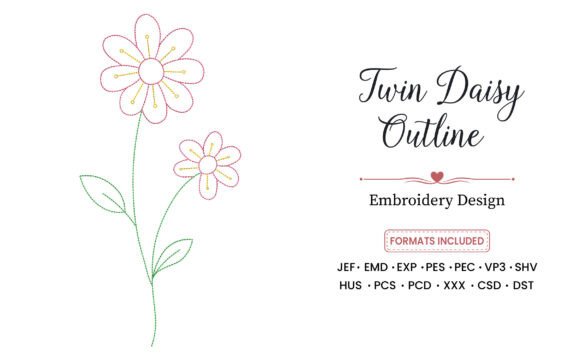
Opening the embroidery file, I immediately noticed the mood. The twin daisies aren’t heavily filled; they’re drawn with a light, playful outline that feels both modern and timeless. There’s a tenderness in the way the two blossoms lean toward each other—ideal for anything that speaks of love, friendship, or family. The design sits firmly inside the Outline Flowers category, and it wears that classification beautifully. It’s not fussy or overly ornate, so it won’t overpower a monogram or a short name added nearby. That simplicity is its greatest strength.
The first test was on a soft cotton swatch meant to simulate a high-end baby bib. I chose a dusty rose thread on cream fabric. The result felt like something you’d find in a boutique nursery—elegant, handmade, and full of quiet sentiment. The outline emphasized the floral shape without ever looking unfinished. It whispers handmade product quality, not mass production.
Where This Design Truly Belongs in a Gift Shop
After testing on several substrates, I can confidently say the Twin Daisy Outline Embroidery Design is a versatile asset for any maker who offers custom embroidery. Here are the products where it felt most at home:
- Baby blankets and nursery decor – The soft lines complement pastel palettes and gentle themes. One daisy near a corner with a baby’s name stitched underneath felt tender and intentional.
- Wedding and anniversary keepsakes – Placed on a linen pillow cover or a set of embroidered hand towels, the twin blooms silently speak of partnership. A bride-to-be saw my sample and immediately asked for a pair of robes with this design and the wedding date.
- Kitchen towels and aprons – I embroidered a set of cotton tea towels with a single placement near the bottom hem. The design’s open nature meant the towel remained usable and washable without stiff patches.
- Tote bags and everyday gifts – An unbleached canvas tote with the daisies and a short “love grows here” phrase felt like a bestseller waiting to happen. It’s a clean, friendly look that appeals to a wide age range.
- Printable mockups and listing previews – When I imported a stitch-out photo onto a mockup, the design’s delicate linework stood out clearly, helping me create Etsy seller listings that actually looked like the finished product.
These real-use experiments confirmed that the design can anchor a wedding gift, a baby embroidery project, or even a simple “just because” present without demanding complicated editing.
Choosing Fabric and Stabilizer: A Few Insider Tips
Outline designs like this one live and die by fabric texture and stabilizer choice. I quickly learned that the Twin Daisy Outline Embroidery Design performs brilliantly on smooth, medium-weight fabrics. Think quilting cotton, linen blends, and high-quality broadcloth. The stitches land precisely, and the loops are small enough to hold their shape without sinking.
On thicker, textured surfaces—like a plush bath towel—I needed to adjust my approach. I hooped a layer of no-show mesh stabilizer and floated a piece of tear-away underneath. The result was clean, but I’d still recommend choosing a low-pile towel and using a contrasting thread color so the outline pops. Thread colors matter enormously: a soft white on cream can look elegant, but you might lose definition in dim lighting. I add a tiny bit of contrast, perhaps a warm taupe or blush, to keep the daisies visible without losing the airy feel.
Stretchy baby clothes require extra care. On a onesie, I used a cutaway stabilizer and a gentle basting spray. The design stitched well, but the delicate petals can pull slightly if the fabric shifts. Always test on a scrap of the exact garment material first, and consider slightly increasing the design size if the petals are very thin in the original file.
Dark Fabric, Small Details, and the Giftability Factor
One of my favorite testers was a charcoal linen pillow cover. I used a pale silver-gray thread, and the twin daisies looked like a moonlit garden. However, dark fabrics demand a preview stitch-out because what looks crisp on screen can disappear in real life. I ran a quick test patch, and it confirmed that bright or metallic threads bring out the best in this design on deep backgrounds.
Speaking of small details, the spaces between the two daisy heads and the stem connections can catch the eye. I always check my finished stitch with a magnifier to ensure no rogue loops or thin spots appear. Because this is a digital embroidery file, you can easily resize it within your hoop’s capacity, but keep an eye on stitch density. Reducing the size too much may close up the delicate outline, while enlarging it might expose gaps. My sweet spot for a baby blanket accent was around 4 inches wide, but you’ll want to test based on your machine’s default thread weight.
How This Design Influences Customer Trust and Perceived Value
When a buyer browses your shop, they’re not just looking at a picture—they’re imagining how the gift will make them feel. The Twin Daisy Outline Embroidery Design has an immediate emotional appeal. It says “I chose this especially for you.” In my gift shop, products featuring this design consistently drew comments like “so delicate” and “what a sweet touch.” That language translates directly into higher perceived value.
I also noticed that the design photographs beautifully. With a little natural light and a simple prop, my product photos for a daisy-trimmed kitchen towel looked editorial. Product photography becomes effortless when the embroidery itself is clean and photogenic. This directly improves buyer engagement, whether you’re selling on Etsy, at a craft fair, or through your own website. A design that looks high-end in a photo helps justify a premium price point, which is essential for small shop product sustainability.
Custom Orders and Gift Personalization: A Designer’s Creative Playground
One of the joys of using an outline design like this is how easily it plays with names, dates, and short quotes. I combined the twin daisies with a curved name embroidered above them for a nursery pillow, and the result felt like a heirloom. For wedding gifts, I paired the design with the couple’s initials and wedding date, all in a single hoop project. The delicate nature of the outline meant the lettering didn’t have to fight for attention.
If you offer commercial embroidery services, always confirm that the design license permits selling finished items. While many creators allow limited commercial use, each machine embroidery design may have its own terms. I make it a habit to read the license details before listing any product that includes a purchased design. Protecting your business and respecting the digitizer’s work go hand in hand.
Stitch-Out Checklist for Consistent, Professional Results
Based on my testing, I now keep a running checklist when I work with the Twin Daisy Outline Embroidery Design. This small routine has saved me from misaligned gifts and wasted materials:
- Test on a scrap of the exact fabric first, including any interfacing or lining.
- Choose a thread color that gives gentle contrast—not the exact same shade as the fabric.
- Confirm your hoop size can accommodate the design plus any planned personalization.
- Review stitch density after resizing; open outlines can become too sparse or too crowded.
- Use the right stabilizer: cutaway for knits, tear-away or wash-away for wovens, and always check the backside for cleanliness.
- Stitch a final sample on a light and a dark fabric to keep as a physical printable mockup for customer previews.
- Examine small details under good light—thin stems and the center of each daisy can occasionally need a thread snip or light press.
These steps ensure that every embroidered towel, pillow cover, or blanket embroidery order leaves my shop looking exactly as promised. Customers notice the neatness, and they come back.
Blending the Design into Seasonal and Evergreen Collections
While the twin daisies feel naturally at home in spring and summer projects, I’ve found they transition beautifully into autumn and winter gifts too. On a warm rust-colored blanket, stitched in cream thread, the design takes on a cozy, nostalgic feel. On holiday aprons, it adds a subtle natural element that softens the festive rush. Because the design is an outline and not a dense fill, it doesn’t overpower seasonal motifs—instead, it complements them.
For craft fair tables, I like to group this design with other gentle Outline Flowers to create a cohesive display. A series of kitchen linens, each with a different floral outline, tells a story of a garden through the seasons. The twin daisies often become the centerpiece because of their sweet “two together” symbolism, which sparks conversation and emotional connection with customers.
Final Notes Before Selling Your First Twin Daisy Product
As with any embroidery file, the real magic happens when you understand both its strengths and its limits. This design won’t be the right choice for extremely dense, tiny lettering placed directly on top of the petals, nor for heavily textured bathrobes where the outline might get lost. But for the right product—a darling baby shower gift, an anniversary pillow, a tote that feels like a hug—it’s a quiet, powerful design that elevates your entire online catalog.
I now keep a stitched sample of the Twin Daisy Outline Embroidery Design pinned to my studio wall. It reminds me that sometimes the most meaningful gifts are the ones that don’t shout. They simply bloom, softly, exactly where they’re needed. If you’re building a collection of personalized gift offerings, give this outline a careful test run. You might just find it becomes one of your best-selling, most-loved stitches.
Remember to check the specific file formats included, confirm the recommended hoop size for your machine, and always stitch a test before committing to a final finished product. When in doubt, a small investment in a trial run pays off in customer confidence—and in gifts that truly mean something.