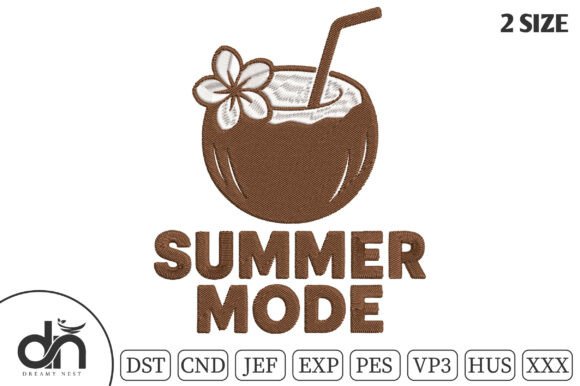
Summer Mode Coconut Drink Embroidery Review
First Impressions and Visual Personality
As soon as I opened the Summer Mode Coconut Drink Embroidery design file, it immediately felt like a breath of tropical air. The composition strikes a balance between playful vacation energy and a cleaner, modern graphic style that doesn't scream "tourist trap." Based on the description—“ultimate vacation spirit” and “stylish and refreshing”—this machine embroidery design reads more boutique-friendly than mass-market souvenir. For a small business merchandising handmade products or building a seasonal line, that first visual note matters. You want something that feels intentional, not generic.
The coconut drink motif pushes it into a relaxed but curated zone. It's not overly rustic or heavily distressed. Instead, it carries a fresh, bright energy that can live comfortably on a crisp organic cotton tee, a canvas tote, or a linen apron without clashing with the brand identity. I’d place its personality somewhere between elevated casual and polished coastal. This gives owners of cafés, florists, bakeries, creative studios, and handmade soap or candle brands a lot of room to work it into visual storytelling without having to redesign their entire aesthetic around one embroidery file.
From a designer’s eye, the outline style suggested by the tropical art feel typically reads cleanly in thread. If the stitch structure translates well on fabric, the finished product can deliver that coveted "hand-stitched but precise" look that customers associate with premium small batch merchandise. That perception alone increases perceived value on an Etsy listing or at a pop-up market.
Business Applications Where This Design Shines
In my daily work with small business owners and apparel decorators, I always test a design through a usage lens first. The Summer Mode Coconut Drink Embroidery is surprisingly versatile, more than a simple summer-themed novelty. It adapts nicely across multiple product categories that drive revenue for handmade brands and merch creators. Here’s where I see the strongest fit.
- Embroidered patch for caps and apparel. Cut and finished as a standalone patch, this design can be heat-sealed or stitched onto baseball caps, denim jackets, or backpack flaps. The tropical mood makes it ideal for seasonal event merch or staff uniforms at a beachside venue.
- Chest logo accent on work shirts. Placed small on a left chest, it works as a subtle branded mark for a café, juice bar, or pet brand that wants to project a friendly, approachable vibe without a corporate feel.
- Apron embroidery for food and craft businesses. A florist, chocolatier, or bakery can use this embroidered detail on a twill or canvas apron to tie together visual branding without text-heavy logos. It becomes a signature mark.
- Tote bag design for boutique merch. Stitched onto a heavyweight cotton tote, this design turns an everyday reusable bag into a lifestyle piece. Customers are more likely to carry and show off a tote that looks like a curated piece of art rather than a loud advertisement.
- Cap embroidery for limited drops. On a low-profile dad cap or a washed-out pigment-dyed hat, the coconut drink art creates an instant summer capsule collection that small boutiques can market alongside candles, sunscreen, or drinkware.
- Product packaging accents and gift sets. For a handmade soap or skincare brand, a small stitched patch of this design can be incorporated into fabric gift wraps, zippered pouches, or product labels, adding texture and a tactile layer that elevates the unboxing feeling.
Case Scenario: A Beachside Café's Branded Merch
Picture a small coastal café called "Coconut Cove." The owner wants branded merchandise that feels like a natural extension of the café's personality—relaxed, sunny, and authentic. The Summer Mode Coconut Drink Embroidery becomes the anchor visual. Aprons stitched with this design create a cohesive team look. Canvas tote bags sold at the counter, embroidered with the same art, become walking advertisements that customers actually want to use. A small run of embroidered patches applied to lightweight hoodies gives the café a seasonal weekend drop that builds community around the brand. This is where a well-chosen machine embroidery design stops being just decoration and starts functioning as a brand asset.
Critical Considerations for Production and Placement
Even the most appealing design can go sideways if it’s forced into the wrong application. I’ve learned the hard way that skipping the practical checks leads to puckered fabric, illegible details, and disappointed clients. With Summer Mode Coconut Drink Embroidery, there are several points worth testing before committing to a production run.
- Small patch sizes demand caution. If you’re shrinking this down to a 2-inch or 2.5-inch embroidered patch, any internal detail in the coconut texture or drink garnish could close up. Always run a stitch-out at the intended final size first, not just the default hoop size.
- Cap fronts and curved surfaces. Caps have a central seam and steep curve that can distort even well-digitized designs. Hooping the cap tightly and using a cap-specific backing is non-negotiable. Test placement to avoid the design wrapping awkwardly around the sides.
- Fabric texture affects readability. A heavily textured fabric like a slub cotton or a heathered blend can make fine details look blurry. Consider a twill backing behind the patch or choose smooth-surface apparel for crisp reproduction.
- Dark uniforms require contrast checks. On black or deep navy fabric, lighter thread colors in the coconut and drink elements need sufficient contrast. The design may need a subtle outline or underlay adjustment to pop off the garment rather than sinking into it.
- Wash durability expectations. For items that go through frequent commercial laundry—aprons, work shirts—use a permanent press stabilizer and high-quality polyester thread that won’t fade or bleed. Test a sample through at least five wash cycles before handing off to the business owner.
- Any tiny lettering must be reviewed. If the design includes small script elements, verify the stitch density and minimum letter height at actual size. Thin satin columns on small letters can fray or become unreadable on soft goods.
How This Embroidery Affects Brand Identity and Customer Trust
I often tell my small business clients that embroidery signals something deeper than a screen print ever will. It raises the tactile experience and communicates care. The Summer Mode Coconut Drink Embroidery can strengthen a brand identity built around warmth, craftsmanship, and thoughtful detail. When a customer holds a tote bag with a neatly stitched design, or sees a barista wearing an apron with this embroidered accent, it quietly reinforces that the business invests in quality touchpoints.
Visual consistency is key. Using the same embroidery file across multiple branded items—a patch on a cap, a chest accent on a work shirt, a larger version on a canvas tote—creates a cohesive look without feeling repetitive. That repetition builds recognition, and recognition builds trust. For an Etsy seller or a craft business, a finished product that feels intentional and well-executed directly impacts buyer engagement and repeat orders. Customers don’t just buy a towel or a cap; they buy into the feeling the design carries. A tropical, refreshing motif like this can anchor a seasonal collection and make a small shop feel like a much larger, curated brand.
Practical Embroidery Designer Notes Before You Commit
Over years of loading embroidery files for commercial projects, I’ve built a mental checklist that saves time, money, and wasted blanks. If you’re considering the Summer Mode Coconut Drink Embroidery for your next client order or your own product line, walk through these steps.
- Test in black and white first. Print out the design preview at exact size in grayscale. If the composition loses clarity without color, it may need contrast adjustments in thread selection or digitizing.
- Review thread color contrast on real swatches. Digital screen colors lie. Pull physical thread cones and lay them on the actual fabric you’ll stitch on. A vibrant turquoise on a screen might read muddy on organic cotton.
- Check spacing and small element clearance. Look at the distance between the coconut body, the drink rim, and any umbrella or straw details. If stitches crowd each other at smaller scales, you’ll get a messy finish.
- Confirm hoop size before hooping. Know the minimum hoop required. Don’t assume it fits a 4x4 just because it looks small on screen; measure the digitized dimensions.
- Stitch a full test on the final fabric and stabilizer combo. Never skip a sew-out. Use the exact garment blank or patch twill, the exact cutaway or tearaway stabilizer, and the final thread brands. Only then will you see if tension adjustments or density tweaks are needed.
- Create a printable mockup for client approval. Take a high-quality photo of the stitched sample and overlay it onto a digital template of the cap, tote, or apron. This step alone can prevent misaligned expectations and costly rework.
- Compare beside other design assets. Lay the finished stitch-out next to your business card, label, or other branding elements. The style should feel like it belongs. If it clashes, you may need to adjust thread tones or placement.
- Confirm commercial licensing before business use. Not all embroidery files carry clear commercial rights. Verify that the digital embroidery file license allows you to stitch and sell finished products on small business merch, patches, and custom apparel without restrictions. The product listing mentions the design, but if license details aren’t stated, reach out to the designer directly.
Maximizing Value with the Summer Mode Coconut Drink Embroidery
One embroidery file can fuel multiple revenue streams when you treat it as part of a larger design asset library. Pair the Summer Mode Coconut Drink Embroidery with complementary tropical or coastal motifs to create full collections. Add a simple text-based logo underneath for a branded patch. Use a printable mockup to present an entire product line to wholesale buyers before a single stitch is sewn. For handmade product sellers, offering a “choose your embroidery” option on totes, aprons, or linen towels can increase average order value and set your shop apart in a crowded marketplace.
Always remain mindful of stitch density. If you’re converting the design into a larger format for a back of a jacket, check that the original digitizing supports enlargement without becoming overly dense. A design that feels soft and wearable on a chest accent can become stiff and uncomfortable if simply scaled up without adjusting internal parameters. Working closely with the digitizer or using a test sew-out at each intended size keeps your commercial embroidery output professional and wearable.
In the end, the Summer Mode Coconut Drink Embroidery brings far more than a seasonal smile to the table. It offers small business owners a visually clean, brand-safe motif that can elevate everyday products into memorable merchandise. With careful testing, smart placement, and attention to fabric texture and thread harmony, this embroidery file has the potential to become a quiet workhorse in a handmade brand’s visual lineup, building recognition stitch by stitch.