Cherry Tomato Patch Embroidery Design Review
First Impression: A Fresh Take on Branded Merch
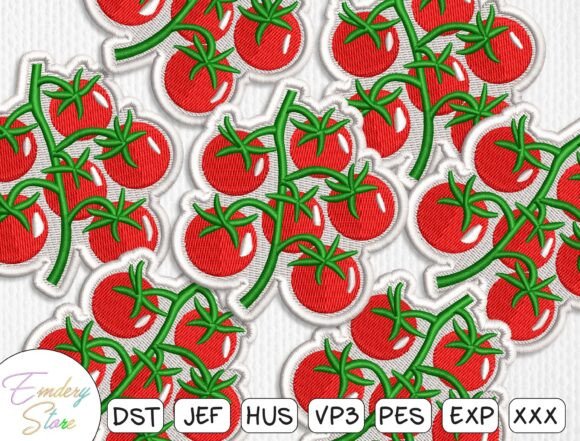
When I first opened the Cherry Tomato Patch Embroidery Design, I immediately felt a wave of rustic charm mixed with a clean, modern simplicity. The cluster of bright red cherry tomatoes resting on a green vine feels both playful and polished — exactly the kind of visual personality a small business needs when building a recognizable brand identity through embroidered merchandise. It does not scream "corporate logo," and that is precisely the point. For a café, bakery, boutique, or handmade brand, this design communicates warmth, freshness, and an artisanal touch that resonates deeply with today's customers.
The composition reads as intentional and balanced, with enough detail in the tomato shapes and vine structure to feel substantial without becoming overwhelming. As an embroidery designer who has tested hundreds of machine embroidery design files, I look for clarity first. This one delivers. The leaves and stems provide gentle contrast against the rounded fruit, and the overall silhouette holds its own even when you squint or step back — a quick test I always recommend for patch work.
Evaluating the Design for Real Business Use
A decorative design is one thing. A design that pulls its weight across multiple small business merch applications is quite another. Let me walk through how the Cherry Tomato Patch Embroidery Design performs in practice.
Embroidered Patches and Brand Marks
This design works wonderfully as an embroidered patch. The rounded, contained shape of the tomato cluster fits naturally into circular or organic patch borders, making it an excellent candidate for iron-on or sew-on patches. I picture it on denim jackets, canvas pouches, and branded tote bags. A small batch of these patches can become a signature addition to a product line, especially for a farm-to-table brand, organic grocer, or garden-inspired studio.
Aprons, Caps, and Sleeve Details
For apron embroidery, this design strikes a sweet spot — large enough to be visible across a chest panel but not so wide that it distorts on curved surfaces. I would place it on the left chest of a bib apron for a bakery or florist shop. For cap embroidery, the vertical cluster orientation fits snugly on a front panel without wrapping awkwardly around side seams. Placement on unstructured caps and dad hats works beautifully, though structured crowns with a center seam require careful hooping and testing. As a sleeve detail on work shirts or lightweight jackets, the Cherry Tomato Patch Embroidery Design adds a subtle branded accent that feels intentional, not forced.
Tote Bags and Product Packaging Accents
A tote bag design featuring this tomato motif instantly elevates a simple canvas bag into something customers want to carry. It whispers "I support local," "I care about quality," and "I appreciate thoughtful details." I have also seen designs like this used on fabric labels, product wraps, and reusable packaging inserts — small touches that increase perceived product value measurably.
Where to Use This Design Carefully
Not every surface is a friend to detailed embroidery. Here is where I urge caution and testing before full production runs.
- Small patch sizes below 2 inches: Detail in the vine and tiny tomato highlights may become muddy. Test at reduced scale first. Consider simplifying or enlarging.
- Curved cap fronts with heavy seams: The design must clear the center seam without distortion. Use a cap-specific hoop and test on the actual cap style.
- High-stitch-density execution: If the stitch density is too high for the base fabric, you risk puckering on lightweight cottons or uneven registration on knits. Always match stabilizer to fabric weight.
- Dark uniforms and low-contrast threads: Cherry red pops on natural, cream, and light backgrounds. On black or charcoal, the vibrancy may drop. Test alternate thread palettes or add a subtle backing outline to maintain visibility.
- Textured or napped fabrics: Towels, fleece, and chunky knits can swallow fine vine details. A water-soluble topper helps immensely here.
- Items needing frequent industrial washing: Ensure thread quality and stabilizer choice are rated for heavy cycles. The design should survive without fraying or color bleed.
Brand Impact and Customer Perception
Small businesses live and die by recognition and trust. Embroidered merchandise carrying the Cherry Tomato Patch Embroidery Design speaks directly to a customer's desire for handmade product authenticity and visual consistency. When someone sees your embroidered patch on a tote, apron, or cap, they connect that image with the experience of your brand — the smell of fresh bread, the warmth of a boutique interior, the joy of receiving a lovingly packed order.
This design supports brand identity in several concrete ways:
- Instant recognition: A bold cluster of cherry tomatoes is distinctive and memorable, even from a distance.
- Emotional association: It draws on feelings of freshness, health, home cooking, and artisanal care.
- Professionalism: A cleanly executed embroidery signals investment in quality, raising seller credibility on platforms like Etsy or at local markets.
- Visual consistency: Using the same digital embroidery file across all branded items unifies your presentation, from event merch to employee uniforms to customer gifts.
- Perceived value boost: Items with custom embroidery command higher prices and generate stronger repeat-buyer engagement than screen-printed alternatives.
Practical Embroidery Designer Notes
Before committing this design to a full production run, I follow a checklist I have built across years of commercial embroidery work. I recommend the same to any studio, print shop, or Etsy seller integrating the Cherry Tomato Patch Embroidery Design.
- Test in black and white first: Convert to grayscale and examine contrast. If the tomatoes and vine blend into one gray mass, thread color separation must be stronger.
- Check small patch size viability: Shrink the design in software to 2 inches wide. Does the vine still read? If not, plan a simplified alternate version for mini patches.
- Review thread color contrast: Bright red, two to three greens, and a subtle accent thread for highlights usually suffice. Ensure the red thread does not bleed onto light fabrics when washed.
- Inspect spacing and pull compensation: Open the embroidery file in your editor and review spacing between elements. Tightly clustered vine leaves can create gaps on stretchy material.
- Confirm hoop size: Verify the file's dimensions against your most-used hoops. A design that requires a rare hoop slows down production and adds cost.
- Test on real fabric scraps: Use the exact fabric, backing, and stabilizer planned for the final product. Test at least three samples under different tension settings.
- Use proper stabilizer: For patches, a sturdy cut-away backing preserves shape. For caps, a medium-weight tear-away with a topper ensures clean registration.
- Create a mockup for client approval: A printable mockup or digital preview on a product photo prevents misalignment of expectations. Clients see context, not just the stitch file.
- Compare beside other design assets: Place the design next to your existing brand marks. Does it harmonize or clash? Consistency across design assets builds trust.
- Confirm commercial licensing: Always verify the license terms attached to the digital embroidery file before using it on merchandise for sale. Check if alterations, resizing, or thread color changes are permitted, and confirm whether credit or extended rights are required for small business merch use.
Fitting Into the Floral Wreaths Category
While classified under Floral Wreaths, the Cherry Tomato Patch Embroidery Design occupies a unique space. It borrows the rounded framing and botanical detail typical of wreath compositions but replaces ornamental flowers with edible fruit. This makes it exceptionally versatile for businesses that want a natural motif without leaning overly feminine or strictly decorative. A florist incorporating this into ribbon wraps, a pet brand using it on bandanas, or a farm stand stamping it on market bags — the design crosses boundaries gracefully.
The Embroidery category placement is accurate, but this design behaves more like a branded patch workhorse than a purely decorative element. Approach it with a merchandise mindset, and it will reward you with a cohesive, customer-facing identity that feels both fresh and enduring.
When the Design Truly Shines
I have seen designs that look stunning on screen but disappoint on fabric. The Cherry Tomato Patch Embroidery Design is not one of them, provided you respect its scale and detail. It shines brightest on custom apparel where the fabric is smooth to medium-textured — think cotton twill caps, structured aprons, heavyweight canvas totes, and brushed cotton work shirts. It also excels as a standalone patch sewn onto denim or leather-look labels, giving your product packaging a handcrafted finish that photographs beautifully.
For event merch and seasonal pop-ups, this design offers a quick way to build visual buzz. A limited run of caps or tees with a crisp cherry tomato motif at a farmers' market or food festival creates an instant connection between your booth and the fresh produce customers came to celebrate. That kind of contextual branding cannot be bought; it is built stitch by stitch.
Final Thoughts From the Stitch Room
After thoroughly reviewing the composition, balance, and application range, I consider the Cherry Tomato Patch Embroidery Design a strong asset for any embroidery shop, apparel decorator, or handmade brand seeking approachable, memorable brand identity through embroidery. It handles the practical demands of machine embroidery design production with grace, from patch creation to garment placement, and it carries an emotional warmth that small business merch needs to stand out in crowded markets.
As always, the gap between a good design file and a great finished product lies in testing, hooping technique, and fabric preparation. Treat this design as a core element of your visual toolkit, not just a one-off decoration, and you will find it pays dividends in buyer engagement, repeat customers, and brand recognition that feels earned rather than manufactured.