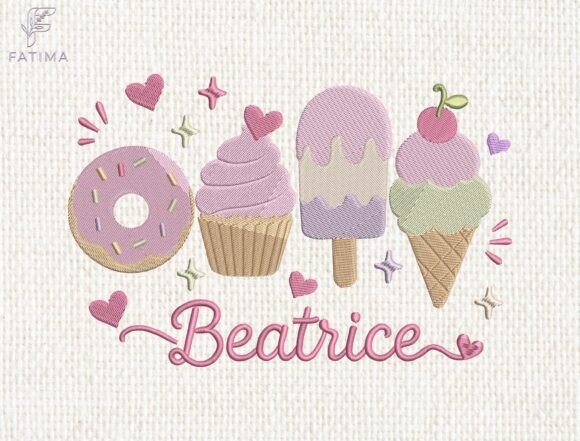
Adorable Sweet Treats Embroidery for Handmade Markets
As an embroidery designer preparing for a weekend craft fair, my first task is to review potential designs from a purely practical standpoint. I need designs that will translate into products that sell, look impressive on the table, and are efficient to produce. When I look at the Personalized Sweet Treats Embroidery, my immediate impression is one of playful, universal appeal. This is not a rustic or minimalist design; it’s whimsical, cute, and undeniably sweet. The dessert icons – donuts, cupcakes, ice cream, and candy – speak directly to a sense of fun and indulgence, which is a powerful draw at a bustling market.
First Impressions and Booth Placement
This design feels decorative and giftable. It doesn’t scream "premium" or "elegant," but it absolutely shouts "adorable" and "fun." That’s a perfect mood for a craft fair booth. Its charm is instant and doesn’t require explanation. In a booth display crowded with handmade products, Personalized Sweet Treats Embroidery would stand out on items meant to be bright, cheerful, and personal. I imagine it positioned on my table near other lighthearted, family-friendly items, perhaps adjacent to a section of baby-related goods given its category, but its appeal is far broader.
Customers scanning a booth make quick judgments. A design with clear, recognizable icons like these acts as a visual anchor. A shopper might notice the colorful desserts on a tote bag from several feet away, prompting them to come closer. The "personalized" element in the title is also a key selling hook; it suggests customization, which increases perceived value and buyer engagement.
Evaluating Product Applications
The real test is how this machine embroidery design performs on actual craft fair products. Let’s walk through the likely candidates.
Tote Bags, Market Bags, and Aprons
For tote bag design and apron embroidery, this collection could be a winner. The icons are likely bold enough to serve as a focal point on a bag’s front panel. On an apron, positioned on the pocket or chest, it creates a cheerful, kitchen-friendly theme. The design must be scaled appropriately. As a large focal design, it would be striking, but I’d need to check the original embroidery file for stitch density. Very dense stitch areas on bags can be time-consuming and may pucker on lighter fabrics without the correct stabilizer.
Tea Towels and Pillow Covers
Tea towel embroidery is a classic craft fair staple. Here, Personalized Sweet Treats Embroidery would work beautifully as a decorative accent near a corner or along a border. However, towel texture is a consideration. The looped terry cloth or linen weave can obscure smaller details. I’d need to test on scrap fabric first to ensure the icons remain crisp. For pillow covers, this design injects a soft, playful vibe, perfect for a child’s room or a whimsical living space.
Caps, Patches, and Small Pouches
These applications require careful review. Embroidering on the curved surface of a cap demands a design that can adapt without distortion. Small details might get lost. As an embroidered patch, this could be fantastic—a standalone, sweet-themed patch for jackets or backpacks has high sellability. For small fabric pouches or giftable items, the design would need to be scaled down, becoming an accent. Tiny lettering, if included in the personalization, could become problematic at very small sizes, losing clarity and increasing production difficulty.
Practical Production and Selling Points
Turning a digital embroidery file into a sellable finished product involves a series of practical checks.
First, I must assess its suitability for batch production. A good fair design is one I can repeat efficiently. Personalized Sweet Treats Embroidery, with its set of icons, feels repeatable. The process would be consistent across multiple items. However, I advise all makers to test the design on scrap fabric first. This reveals crucial information: how the thread colors pop on different backgrounds, the actual stitch density, and whether any areas are too delicate.
Check thread contrast is vital, especially for dark fabrics. Bright dessert icons on a dark tote bag need high-contrast, vibrant threads to maintain their whimsical feel. I would also review spacing between elements and confirm hoop size requirements from the file details. Using the right hoop size and stabilizer for each fabric texture is non-negotiable for professional results.
Photography and Online Sales
For Etsy sellers and small shop products, how a design photographs is critical. This design, being colorful and icon-based, should photograph well for online listings. It’s easy to understand at a glance in a thumbnail image. Creating at least one real mockup, rather than relying solely on a printable mockup, is essential. A real embroidered tea towel photographed in natural light showcases the handmade quality and texture far better than a digital simulation.
Designer Notes for Commercial Success
My final review always revolves around value, display, and legal readiness.
Personalized Sweet Treats Embroidery boosts visual appeal by tapping into a popular, light-hearted theme. This increases customer attention and can justify a slightly higher price point due to its personalized nature. For brand consistency, if your booth leans toward fun, food-themed, or baby/child-friendly items, this design strengthens that identity.
For booth display strength, I would create a standout sample, like an embroidered tote bag, and display it prominently. It acts as a conversation starter. A parent might point it out to their child, or a buyer might ask about adding a name.
Lastly, a crucial step for any commercial embroidery project: confirm commercial licensing before selling finished products. The product description provided does not specify license terms. I must verify that the digital embroidery file I purchase or use includes the right to sell the physical items I make. This is a fundamental step for every responsible creative entrepreneur.
In summary, Personalized Sweet Treats Embroidery presents a strong opportunity for craft fair and handmade market sales. Its inherent charm, clear imagery, and personalization hook make it a magnet for buyer engagement. By carefully selecting the right products—likely focusing on tote bags, towels, and patches—and adhering to methodical production checks, this design can become a delightful and profitable part of your booth offerings.